

Reviewed October 10, 2026: Water is essential for life, farming, food, cleaning, industry, and healthy ecosystems. These Class 5 Importance of Water notes explain where water comes from, how the water cycle works, why not all freshwater is safe to drink, and what students can do to conserve it.
Curriculum note: this page has an older “Science Chapter 6” web address, which we have kept to preserve existing bookmarks. Under the current NCERT Class 5 Our Wondrous World textbook (2026–27), the relevant chapter is Chapter 1: “Water — The Essence of Life” in The World Around Us, not Chapter 6. Different schools may have a separate textbook with a chapter titled “Importance of Water.” See the official NCERT ePathshala Chapter 1 resource.
Why Is Water Important? Five Key Reasons
- Living things need water: plants take up water through roots, and animals and people need water for essential body processes.
- Food production depends on water: farmers use rainfall and irrigation to grow crops, while animals and many food-processing activities require water.
- Good hygiene needs safe water: washing hands, cleaning food and keeping surroundings sanitary helps protect health.
- Water supports natural habitats: rivers, ponds and wetlands provide homes for fish, insects, birds, plants and other organisms.
- Communities use water: homes, schools, hospitals, transport and industry rely on sufficient and well-managed supplies.
Quick example: If a pond dries up, not only fish are affected. Birds that feed on fish, nearby plants, insects and farmers may be affected too. This is why water conservation matters for the whole ecosystem.
How Much of Earth Is Covered by Water?
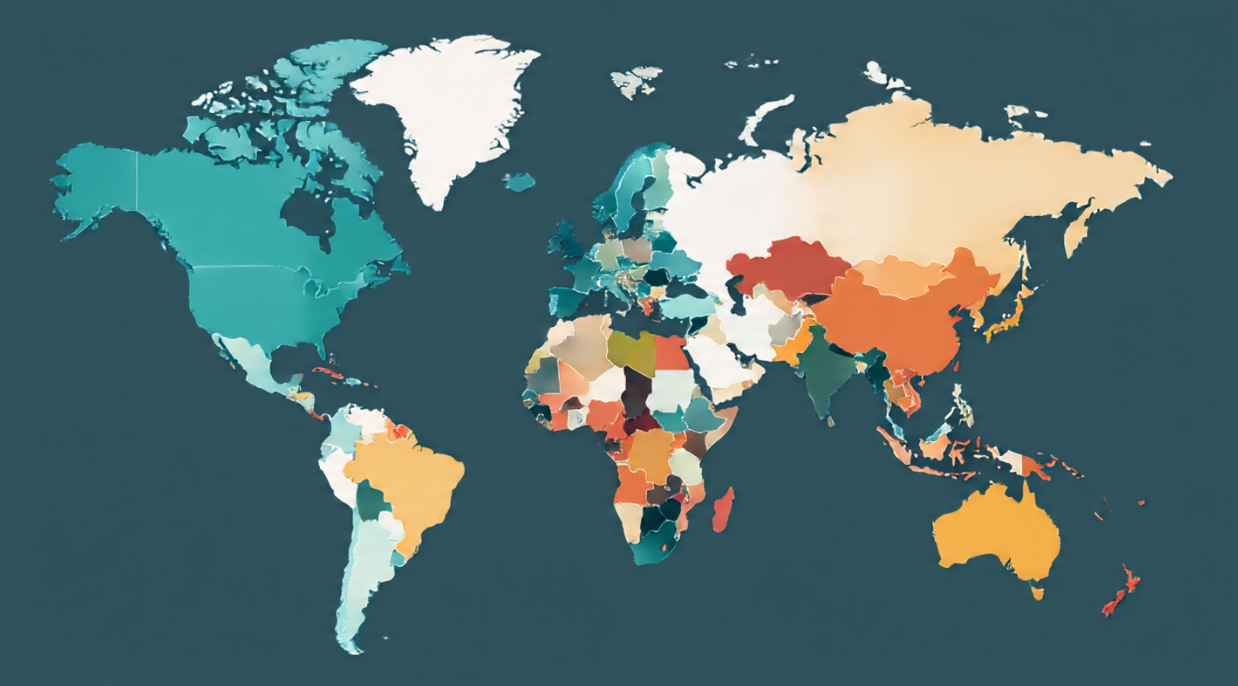
About 71% of Earth’s surface is covered by water—not 97%, as older versions of this article incorrectly stated. About 96.5% of all Earth’s water is stored in oceans and is salty. Only around 2.5% of Earth’s water is freshwater, and much of that is frozen or stored underground. Freshwater is not automatically safe drinking water: water can contain disease-causing microbes or harmful chemicals.
Sources: US Geological Survey: How Much Water Is on Earth? and USGS freshwater distribution.
Main Sources of Water
| Water source | Examples | Important point |
|---|---|---|
| Rain and snow | Precipitation falling from clouds | Refills rivers, lakes, soil moisture and some groundwater stores |
| Surface water | Rivers, streams, lakes, reservoirs and ponds | Often needs suitable treatment before drinking |
| Groundwater | Water held in cracks and spaces in rocks and soil, accessed through wells or springs | Replenished partly when rainwater infiltrates the ground |
| Frozen water | Glaciers, ice sheets and seasonal snow | Stores a large share of freshwater |
| Ocean water | Seas and oceans | Salty; cannot be used as ordinary drinking water without desalination and treatment |
The Water Cycle: Evaporation, Condensation, Rain and Collection
The water cycle is the continuous movement of water among oceans, the atmosphere, land, plants, rivers, ice and underground stores. It has no fixed beginning or end. The Sun’s energy drives much of evaporation, while gravity moves rainfall and flowing water downhill. The following steps are a helpful Class 5 simplification:
- Evaporation: liquid water warms and changes into invisible water vapour, which enters the air. Water can evaporate without boiling.
- Transpiration: plants also release water vapour from their leaves into the air.
- Condensation: as moist air cools, water vapour can form tiny liquid droplets, such as those found in many clouds.
- Precipitation: water falls from clouds as rain, snow, hail or sleet, depending on conditions.
- Runoff, collection and infiltration: some water flows to rivers, lakes and seas, while some soaks into the soil and replenishes groundwater. Evaporation begins again.
Remember: clouds consist of tiny liquid water droplets and/or ice crystals; invisible water vapour is not itself the white cloud. Learn more with the USGS Water Science School.
Two Learning Videos: English and Hindi
These publicly listed educational YouTube videos explain the water cycle, a central concept in this lesson. They are hosted by their original publishers; we have not copied, downloaded or re-uploaded their work. If the creators disable embedding, open the original YouTube link instead.
English: The Water Cycle for Kids — Learn Bright
Watch the public English water-cycle lesson on YouTube (Learn Bright).
Hindi: जल चक्र — Water Cycle for Kids
Watch the public Hindi जल चक्र lesson on YouTube (Sonalika e-Gurukul).
While watching: pause the video and explain how evaporation differs from condensation. Sketch arrows from a lake to the sky, from clouds to rainfall, and from rivers back to a lake or sea.
Three Safe Class 5 Activities About Water
| Activity | What to do | What you learn |
|---|---|---|
| Condensation on a cold glass | With an adult, place ice-cold water in a dry glass; wait a few minutes and observe droplets on the outside | Water vapour in nearby air condenses on the cold glass |
| Slow evaporation | Put the same small amount of clean water in two shallow containers; place one in a breezy shaded spot and one in a sheltered shaded spot, and observe over a day | Wind and air conditions influence evaporation; keep variables as similar as possible |
| Classroom water audit | Count dripping taps or unnecessary running-water minutes at home or school; record observations without touching unsafe fixtures | Small daily habits can reduce avoidable wastage |
Safety: these activities do not require boiling water, handling chemicals or tasting any collected water. Children should carry them out with appropriate adult supervision. Water from the condensation or evaporation experiment is not for drinking.
Clean Water, Safe Drinking Water and Conservation
Water that looks clear is not necessarily safe to drink. Some microbes and chemicals cannot be seen. Use water from an approved safe source and follow local public-health advice if there is a water-safety warning. Boiling can kill many disease-causing germs, but boiling does not remove fuel, toxic chemicals or radioactive contamination. Adults should follow the local health authority’s instructions for any treatment needed. See the CDC safe-water guidance and WHO drinking-water facts.
- Turn off taps properly while brushing teeth or washing dishes.
- Report leaking taps, toilets or pipes to an adult so they can be repaired.
- Reuse suitable leftover clean water for plants where appropriate.
- Keep litter, oils and harmful chemicals out of drains and natural water bodies.
- Follow local guidance on safe rainwater collection and water use, especially during dry seasons.
Five Original Class 5 Questions with Answers
- About how much of Earth’s surface is covered by water? A. 7% B. 21% C. 71% D. 97%
- What happens during condensation? A. Liquid turns into gas B. Water vapour turns into liquid droplets C. Water disappears D. Salt becomes freshwater
- Which process returns some rainfall into underground rock and soil? A. Infiltration B. Photosynthesis C. Reflection D. Freezing
- Which statement is scientifically correct? A. All freshwater is safe to drink B. Clouds are only invisible water vapour C. Rainwater can flow as runoff or soak into soil D. Oceans contain mostly freshwater
- Which action helps conserve water? A. Leaving a tap open B. Reporting a leaking pipe C. Throwing rubbish into a stream D. Ignoring wastage
Answer key and explanation: 1-C (about 71% surface coverage); 2-B (vapour cools to liquid droplets); 3-A (infiltration moves water into soil); 4-C (both runoff and infiltration occur); 5-B (fixing leaks prevents wastage). Use these questions to review the water cycle and practise explaining scientific observations.
Importance of Water for Class 5: FAQs
What are the main steps of the water cycle?
A useful simplified sequence is evaporation, condensation, precipitation and collection/runoff, with transpiration and infiltration also playing important roles. It is continuous and has no single starting point.
Is 97% of Earth’s surface covered in water?
No. Water covers about 71% of Earth’s surface. The statement often confused with this is that oceans contain about 96.5% of all Earth’s water by volume.
Why can we not drink most ocean water?
Ocean water is saline. It needs specialised desalination and suitable treatment before it can be used as drinking water.
Is “Importance of Water” Chapter 6 in the current Class 5 NCERT textbook?
No. The 2026–27 NCERT Class 5 Our Wondrous World book teaches the topic in Chapter 1, “Water — The Essence of Life.” A school’s separate Science textbook may have different numbering.
Official References and Related Learning
- NCERT ePathshala: Class 5 Water — The Essence of Life — original curriculum resources
- USGS: water-cycle learning and science
- Current NCERT Class 5 The World Around Us chapter guide
- Class 4 NCERT The World Around Us learning guide
Editorial standard: independently written class-level explanations and activities are informed by NCERT, USGS and public-health guidance. Third-party videos are embedded from their official public YouTube pages, with credit and no re-uploading. This lesson provides science learning, not a claim that any one Olympiad organiser follows its chapter numbering.







Leave a Reply