

Planning an Olympiad exam registration for 2026–27? Students and schools should select a genuine current cycle rather than rely on expired 2025 dates and fees. The independent School Connect Olympiad (SCO) offers subjects including Maths, Science, English, Coding, AI, General Knowledge, Life Skills and more, with different class requirements. This guide explains exactly how students, parents and school coordinators can choose an Olympiad, review current exam dates, check class eligibility, register securely and begin with free chapter-wise lessons, linked videos and practice questions. It also includes preparation advice and 20 original solved questions.

Important update: 2025 registration dates have expired
Information checked: 20 October 2026. This article was originally written for Olympiad Exam Registration 2025, but its old fee table and 2025 examination dates are no longer current. The official School Connect exam calendar currently presents a Winter 2027-labelled cycle running in October–December 2026. It lists 13 active Olympiad subjects and their published dates. The 18 October 2026 slot has passed; the remaining published future dates are 6, 14 and 15 November, and 4, 12 and 20 December 2026. Use the live portal to verify your exact exam’s availability before payment.
The separate Summer Olympiad 2027 guide gives a 1 April–31 July 2027 planning window with 31 August 2027 results-publication guidance, but this does not establish bookable dates for any particular subject or class. The registration portal remains the source of truth as new cycles are activated.
Register for an Olympiad online: individual student steps
The official SCO individual Olympiad registration form presents a student journey from details to subject selection, date choice and payment. A parent or guardian should help younger children enter personal details and review any applicable fee.
- Open the official registration page: confirm the website is schoolconnectonline.com rather than a social-media payment link or a copy.
- Choose the student’s Olympiad subject(s): use the subject selector; multiple selections may change the total displayed fee.
- Enter accurate student details: name, actual grade/class, school, city/country and appropriate guardian-managed contact information. Check spelling because records may later appear in results or certificates.
- Select the available exam date: choose a genuinely offered date in the correct cycle for the selected subject and class. Compare local time zones when registering from another country.
- Review and pay through the official flow: check the displayed amount, currency, terms, identity of the organiser and payment confirmation before completing the transaction.
- Keep the confirmation safe: note the registered email and official instructions. Before the exam, use the student login and verify the correct date, equipment, identity and exam integrity requirements.
The form is designed to show a total selected exam fee and the next steps after subject selection. We do not state a fixed ₹ or US-dollar price because it can change by subject, cycle and region. If a date, payment method or country is unavailable, do not assume that the public timetable guarantees a confirmed place.
Register a school or institution: coordinator workflow
Schools should use the separate SCO School / Institution Registration form. The institution form collects official school and coordinator information, location and time zone, proposed participation mode, cycle and subject planning. It is different from a parent booking a single student examination.
- Register the institution: give the school name, official email, address, principal or head, Olympiad coordinator and authorised contact details.
- Set the planning context: indicate country/time zone, academic year, relevant cycle, online or offline preference and approximate student count where requested.
- Choose subjects and eligible classes: use the registration planning board rather than copying an old general Grade 1–12 table.
- Choose published dates or request a custom date: a custom date is subject to SCO review and approval, not automatically confirmed.
- Submit an authorised request: review the data and consent statement; later student-list upload, account access and readiness steps occur as part of onboarding after review.
School organisers should check the actual selected cycle and date displayed in the form before final submission. Some older information may still be visible on secondary pages; the public current exam calendar and the active registration selection should agree before a school treats an appointment as confirmed.
Winter 2027 Olympiad dates and eligibility: what is published?
The official Winter 2027 cycle schedule currently displays the same remaining published dates for its 13 listed subjects: 6 Nov, 14 Nov, 15 Nov, 4 Dec, 12 Dec and 20 Dec 2026. This is a calendar listing, not evidence that every grade or country still has a bookable place. Choose the correct subject and class in the current student or school form to verify.
- Maths (SCO IMO), English (SCO IEO) and Science (SCO ISO): the calendar advertises Classes 1–12, subject to live class selection.
- Artificial Intelligence (SCO IAIO) and Coding (SCO ICO): the current Winter calendar advertises Classes 6–12. Younger-class AI and Coding study lessons may exist without an examination in this cycle.
- General Knowledge (SCO IGKO): the current Winter calendar labels Classes 1–10. Do not assume Grades 11–12 can book it.
- Biology, Chemistry, Physics, Finance, Life Skills, Mental Ability and Entrepreneurship: class-wise options are available, but families should confirm eligibility for the chosen subject through the registration and subject pages.
Explore the 13 current School Connect Olympiads
School Connect currently displays 13 active Olympiad pathways for its Winter cycle. The list below is a learning and selection guide, not a guarantee that all thirteen examinations are offered to every grade or country.
- International Mathematics Olympiad (SCO IMO): arithmetic, geometry, algebra and problem-solving — Maths subject and class chapters.
- International Science Olympiad (SCO ISO): class-level science concepts and inquiry — Science learning hub.
- International English Olympiad (SCO IEO): grammar, reading, vocabulary and language — English learning hub.
- International Coding Olympiad (SCO ICO): logic, computational thinking and age-appropriate programming — Coding chapters.
- International Artificial Intelligence Olympiad (SCO IAIO): data, machine learning foundations and responsible AI — AI learning hub.
- International Mental Ability Olympiad (SCO IMAO): patterns, figures, analogies and logical reasoning.
- International General Knowledge Olympiad (SCO IGKO): science, culture, geography, history and age-appropriate general awareness.
- International Finance Knowledge Olympiad (SCO IFKO): budgeting, saving and responsible financial literacy — Finance Knowledge learning.
- International Life Skill Olympiad SDGs (SCO ILSO): safety, good habits, environmental responsibility and decision-making.
- International Entrepreneurship & Innovation Olympiad (SCO IEIO): creativity, problem-solving and ethical projects — Entrepreneurship chapters.
- International Physics Olympiad (SCO IPhO): mechanics, electricity, optics and quantitative reasoning — Physics class chapters.
- International Chemistry Olympiad (SCO IChO): chemical concepts, reactions and age-appropriate theory.
- International Biology Olympiad (SCO IBO): organisms, cells, physiology and the science of living systems.
SCO’s subject names should not be confused with similarly named official international national-team competitions, such as the International Mathematical Olympiad or International Physics Olympiad. School Connect’s independent exams are not automatically a national selection or affiliation pathway.
Free chapter-wise study materials and grade-specific syllabuses
School Connect’s core educational offer is free chapter-wise learning materials, linked educational videos and practice questions, improved over time. Exam registration is separate from learning. The discontinued Learn, Grow and Compete subscription plans are not required or promoted.
Begin with the student’s own Olympiad subject directory or select the correct grade to see its subjects. A grade directory may include chapters for a subject even when the current examination calendar does not offer that grade. The chapter pages can also indicate whether a syllabus, sample, past paper or answer key is actually available as a PDF; some topics still show that downloads are coming soon.
- Class 1 Olympiad subject and free study resources — choose Maths, English, Science, Coding, AI or another class-appropriate chapter available in the directory.
- Class 2 Olympiad subject and free study resources — choose Maths, English, Science, Coding, AI or another class-appropriate chapter available in the directory.
- Class 3 Olympiad subject and free study resources — choose Maths, English, Science, Coding, AI or another class-appropriate chapter available in the directory.
- Class 4 Olympiad subject and free study resources — choose Maths, English, Science, Coding, AI or another class-appropriate chapter available in the directory.
- Class 5 Olympiad subject and free study resources — choose Maths, English, Science, Coding, AI or another class-appropriate chapter available in the directory.
- Class 6 Olympiad subject and free study resources — choose Maths, English, Science, Coding, AI or another class-appropriate chapter available in the directory.
- Class 7 Olympiad subject and free study resources — choose Maths, English, Science, Coding, AI or another class-appropriate chapter available in the directory.
- Class 8 Olympiad subject and free study resources — choose Maths, English, Science, Coding, AI or another class-appropriate chapter available in the directory.
- Class 9 Olympiad subject and free study resources — choose Maths, English, Science, Coding, AI or another class-appropriate chapter available in the directory.
- Class 10 Olympiad subject and free study resources — choose Maths, English, Science, Coding, AI or another class-appropriate chapter available in the directory.
- Class 11 Olympiad subject and free study resources — choose Maths, English, Science, Coding, AI or another class-appropriate chapter available in the directory.
- Class 12 Olympiad subject and free study resources — choose Maths, English, Science, Coding, AI or another class-appropriate chapter available in the directory.
Sample practice: 20 original questions with worked answers
These are original examples for learning, not past School Connect exam questions or official national-team papers. They show the broad range of possible school-level reasoning; the actual registered paper will follow its own class- and subject-specific syllabus.
Classes 1–3 — practice
Question 1. A child has 9 pencils and receives 6 more. How many now?
A. 15 B. 14 C. 16 D. 13
Answer: A. 15. 9 + 6 = 15 pencils.
Question 2. Which word is the opposite of ‘wide’?
A. Large B. Narrow C. Tall D. Bright
Answer: B. Narrow. Narrow is the opposite of wide.
Question 3. Which part of a plant usually takes up water from soil?
A. A petal B. Fruit C. Roots D. Flower
Answer: C. Roots. Roots commonly take up water and nutrients.
Question 4. What should a child do before sharing a password in an app?
A. Share it with new online friends B. Post it publicly C. Ignore all adults D. Ask a trusted adult and keep it private
Answer: D. Ask a trusted adult and keep it private. Passwords and personal details should be protected.
Question 5. Complete the pattern: 4, 8, 12, 16, __.
A. 20 B. 18 C. 21 D. 24
Answer: A. 20. This arithmetic pattern increases by four, so 16 + 4 = 20.
Classes 4–6 — practice
Question 6. What is 3/5 of 40?
A. 16 B. 24 C. 30 D. 32
Answer: B. 24. 40 ÷ 5 = 8, so 3 × 8 = 24.
Question 7. A rectangle is 8 cm long and 6 cm wide. What is its area?
A. 14 cm² B. 28 cm² C. 48 cm² D. 96 cm²
Answer: C. 48 cm². Area equals length times width: 8 × 6 = 48 cm².
Question 8. In a fair plant experiment about sunlight, what should stay as similar as practical?
A. All factors should change B. Plant names must be secret C. Record no observations D. Water and soil conditions
Answer: D. Water and soil conditions. Keeping other conditions similar helps isolate the effect of light.
Question 9. Four notebooks cost a fictional ₹25 each. What is the total?
A. ₹100 B. ₹75 C. ₹125 D. ₹29
Answer: A. ₹100. 4 × ₹25 = ₹100.
Question 10. Which choice shows a clear computer algorithm?
A. A random guess B. A sequence of instructions with a goal C. A blank sheet D. A password shared publicly
Answer: B. A sequence of instructions with a goal. Algorithms are organised steps for performing a task.
Classes 7–9 — practice
Question 11. Solve 4x + 3 = 31. What is x?
A. 5 B. 6 C. 7 D. 8
Answer: C. 7. Subtract 3, then divide 28 by 4: x = 7.
Question 12. What process changes liquid water into water vapour?
A. Condensation B. Freezing C. Melting D. Evaporation
Answer: D. Evaporation. Evaporation converts liquid water to vapour.
Question 13. A fair die is rolled. What is the probability of an even result?
A. 1/2 B. 1/3 C. 1/6 D. 2/3
Answer: A. 1/2. Even faces are 2, 4 and 6: 3/6 = 1/2.
Question 14. A fictional event earns ₹850 and has ₹600 in total costs. What is its profit?
A. ₹1,450 B. ₹250 C. ₹600 D. ₹850
Answer: B. ₹250. Profit = revenue − total expenses = ₹850 − ₹600 = ₹250.
Question 15. Why should a simple image classifier be tested on new examples?
A. To make every prediction certain B. To avoid checking data C. To see how it performs on unseen examples D. To guarantee fairness
Answer: C. To see how it performs on unseen examples. Testing on unseen cases helps reveal limitations and errors.
Classes 10–12 — practice
Question 16. A net force of 15 N acts on a 5 kg object. What is acceleration?
A. 2 m/s² B. 5 m/s² C. 20 m/s² D. 3 m/s²
Answer: D. 3 m/s². By F = ma, acceleration = 15/5 = 3 m/s².
Question 17. What is the derivative of x³?
A. 3x² B. x² C. 3x D. x⁴
Answer: A. 3x². The power rule gives d(x³)/dx = 3x².
Question 18. In an experiment, what should a graph’s slope represent?
A. Always the total of coordinates B. The change in y divided by change in x with units C. Only the horizontal intercept D. A guess unrelated to measurements
Answer: B. The change in y divided by change in x with units. Slope = Δy/Δx and should have physical or mathematical meaning and suitable units.
Question 19. A model reports 36 correct predictions from 40 tested cases. What is its measured accuracy on those cases?
A. 36% B. 80% C. 90% D. 95%
Answer: C. 90%. 36/40 = 0.90 or 90%; this does not guarantee accuracy on future data.
Question 20. A student finds an online ‘official Olympiad’ exam payment link on a random social account. What should they do?
A. Pay quickly B. Share all private documents C. Assume a logo proves authenticity D. Verify dates and payment through the official organiser
Answer: D. Verify dates and payment through the official organiser. Only the organiser’s authorised registration process should be trusted for sensitive information and payment.
A four-week preparation plan after choosing a subject
- Week 1 — Match syllabus and class: read the relevant free chapter topics, try a few diagnostic examples and identify gaps.
- Week 2 — Learn concepts: focus on difficult chapters with linked lessons and video explanations when they genuinely match the topic.
- Week 3 — Apply and explain: try original reasoning questions, useful hands-on projects and officially available sample-paper exercises.
- Week 4 — Review readiness: redo mistakes, confirm any booked time zone, read official exam rules and prepare the device or school environment.
Two practical registration examples
Example A: parent registering a Class 2 Maths student
Suppose your child is in Class 2 and enjoys number puzzles. First open the Class 2 Maths chapters and check the age-appropriate syllabus. Next, visit the current dates calendar; the Winter cycle currently lists Maths for Classes 1–12, but you must check whether a Class 2 slot is still offered in the actual booking step. On the individual form, select Maths and Class 2, enter the required guardian-managed contact details, choose a real available slot, and review the displayed total. Keep the resulting confirmation and prepare using free lessons. If the desired cycle is not available, continue learning and revisit the official calendar later rather than paying for an assumed slot.
Example B: a school coordinating several subjects
Suppose a school coordinator wants to introduce Maths, English and Science learning to several classes. The coordinator should open school registration, enter genuine institution details and their authorised contact information, choose the current cycle, and plan each subject with its correct class range. Published dates can be reviewed within the planning flow; a custom date is a request for approval, not an automatic booking. After the school submission is reviewed, follow the organiser’s onboarding process for student data and access rather than uploading personal lists to informal channels.
If a date, fee or registration confirmation looks wrong
- Wrong year or expired date: return to the current cycle calendar; ignore historical 2025 dates shown by search engines or saved copies.
- Class not offered: confirm eligibility on the live subject form. A free chapter page alone is not proof of exam eligibility.
- Unexpected currency or total: check the selected Olympiad count, region and available payment method before proceeding.
- Paid but no confirmation: save the transaction reference privately, check the registered email and spam folder, and seek help via the official School Connect site before attempting a second payment.
- School custom date pending: wait for the organiser’s approval; do not publish an unconfirmed school exam date to parents.
- Conflicting exam rules: follow the dated, class-specific instructions for the exact booked subject and cycle.
Before registering: practical checklist for parents and schools
- Organizer: use the official schoolconnectonline.com student or institution registration form.
- Eligibility: confirm actual class and subject-specific restrictions rather than assuming all 13 work for every grade.
- Cycle: choose an active date shown for the selected exam. The 2025 dates in old articles are expired.
- Fees: check the amount and currency shown at checkout; do not use archived ₹ or USD amounts.
- Privacy: a responsible adult should handle a young child’s contact details; avoid posting ID documents or passwords publicly.
- Exam language and location: verify international country support, language, local time zone and technical requirements.
- Paper and award rules: check subject duration, marking, allowed materials, results and any recognition policies in the current cycle.
- Payment and confirmation: keep the transaction record and official message; contact the organiser if anything appears inconsistent.
Classroom activities and School Connect learning moments
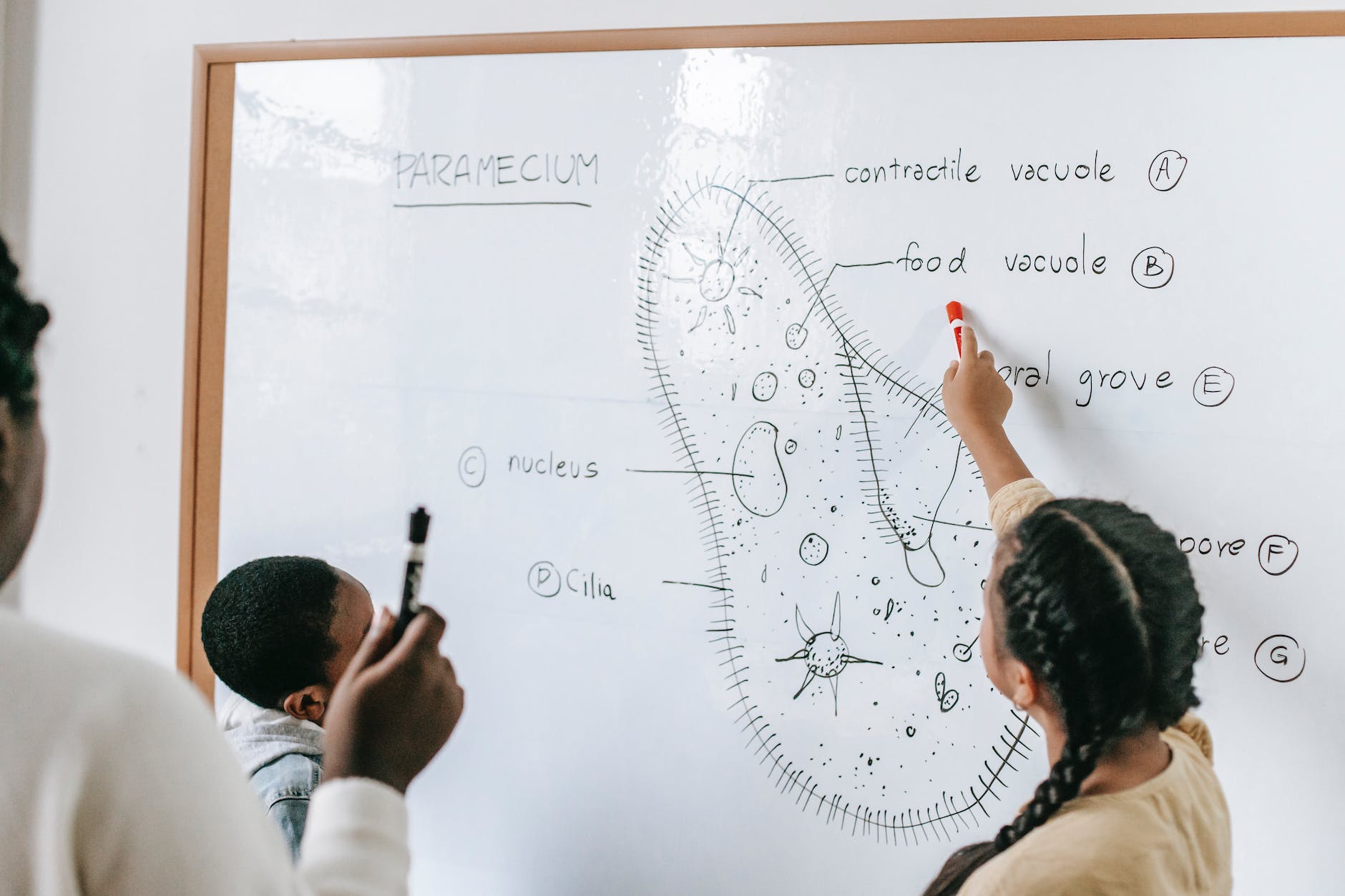
Preparing for Olympiads includes more than a checkout process. Students build curiosity through classroom conversations, supervised experiments and solving problems with peers. These photographs come from earlier School Connect educational activities.


Results, certificates and educational value
The SCO results centre and award information describe current results and recognition processes. Do not assume an automatic international scholarship, university admission, certificate type, trophy or chance to represent a country simply by registering. What students can work toward through thoughtful preparation is stronger subject understanding, mathematical reasoning, communication and responsible problem-solving.
Frequently asked questions: Olympiad registration 2026–27
How do I register for School Connect Olympiad exams in 2026–27?
Use the official student registration form, choose a subject and student class, enter required details, select an available examination date and review the actual fees and terms before payment.
Is the old 2025 Olympiad registration still valid?
No. The 2025 dates in the archived version of this article have passed. Use the live current 2026–27 calendar and registration form for upcoming appointments.
When is the next SCO Winter Olympiad exam?
The public Winter 2027-labelled cycle shows future dates from 6 November through 20 December 2026. Individual subject and class booking must be confirmed on the actual registration form.
When will Summer Olympiad 2027 registration open?
SCO’s published Summer 2027 planning window is 1 April–31 July 2027. Exact bookable subject dates should be treated as pending until published in the official portal.
Which classes can take SCO Maths, English and Science Olympiads?
The current Winter cycle shows Maths, English and Science pathways for Classes 1–12. Verify the selected student’s actual class and chosen paper during registration.
Can Class 1–5 students register for SCO AI or Coding exams in the current Winter cycle?
The current official Winter calendar labels AI and Coding exam slots for Classes 6–12. Younger pupils can access free age-appropriate AI and Coding chapter learning, but should not assume their grade is bookable in this cycle.
What about General Knowledge and Physics eligibility?
The Winter calendar labels General Knowledge for Classes 1–10; SCO Physics has its own class-wise subject requirements. Check the live subject and registration selection for the exact eligible classes.
Can I choose more than one subject?
The individual registration form supports selecting multiple Olympiads. Review your actual schedule, study load and total fee before confirming.
Are School Connect learning materials free?
Yes. SCO provides free chapter-wise lessons, linked educational videos and practice questions. Exam registration and any applicable fee are separate.
Do I need Learn, Grow or Compete subscriptions to study?
No. Those earlier paid plans have been discontinued. Use the current free chapter-wise study materials instead.
What is the current Olympiad exam fee in rupees or dollars?
Fees depend on the selected subject, cycle and payment or region settings. The amount displayed in the live registration form should be reviewed before payment; old 2025 fee tables are not reliable.
Can a school register an entire group of students?
Yes. Use the school/institution form. A coordinator enters school details, chooses the cycle and subject ranges, and reviews dates. Custom school dates are requests requiring approval, not immediately confirmed appointments.
Does the school form upload every student immediately?
The school page says student upload and access arrangements follow registration review and onboarding. The initial form is primarily for institution and exam planning.
Can international students register from any country?
The online form supports international details, but grade equivalence, supported payment, language, time zone and actual eligibility must be confirmed for the student’s location.
Do all subjects use the same exam length and marking scheme?
No. Confirm question count, duration, marking and permitted materials in the exact exam instructions for the chosen cycle and class.
Where do I find sample papers and answer keys?
Choose the current class and subject learning page. Some resource hubs contain downloadable PDFs while others say downloads will be available soon; do not assume all files are published.
Is SCO identical to the official IMO, IPhO or national Olympiad selection?
No. School Connect’s independent programmes are not automatically selection routes to national teams in official international mathematics, physics or science Olympiads.
Are scholarships, international admissions or medals guaranteed?
No. Awards and recognition depend on current SCO rules and a student’s actual result. No Olympiad participation guarantees a scholarship or university admission.
What should I do if payment succeeds but I receive no confirmation?
Keep payment evidence private, check the email address and spam folder used for registration, and contact support through the official SCO website rather than paying again immediately.
Where can I check my Olympiad results?
Use the official SCO results centre and cycle-specific rules after the exam. Exact result timing and certificate availability should not be assumed from an older article.
Choose the right subject and check the live date
Start with the current SCO Olympiad schedule, then use individual student registration or school registration for the right route. For learning before registration, explore the importance of Olympiad-style learning, the Maths Olympiad preparation guide and Summer 2027 planning information. The right next step is an appropriate learning chapter, followed by a confirmed date—not another outdated fee table.









Leave a Reply