

Olympiad Learning in Kuwait: Maths, Science, English and Student Opportunities
Students in Kuwait can enjoy Maths puzzles, Science investigations, language challenges and creative projects both in school and through enrichment activities. A good Olympiad experience begins with curiosity: asking why something works, drawing a solution, checking evidence and sharing what you learn. This guide brings together real Kuwait learning opportunities for 2026–27, official education news, useful subject resources and 20 original questions with clear explanations.
Whether your child attends a Kuwaiti public school or an international school, start with the school subjects they already know. Then choose a small challenge that stretches their thinking without making study feel stressful.

Discover Science and Olympiad Opportunities in Kuwait
Kuwait offers several different ways for students to learn beyond their lessons. Some programmes focus on research projects, others on robotics, and some on subject-based Olympiad questions. Here are starting points for students, families and teachers:
| Learning opportunity | Who or what it supports | Official information |
|---|---|---|
| Kuwait Science and Engineering Fair | Pre-university students who enjoy investigating questions, building projects and presenting findings. The annual fair is run by the Kuwait Science Club. | Kuwait Science Club and Kuwait University report |
| Kuwait National Robotics Championship 2026–27 | Young people interested in robotics, programming, engineering and teamwork, through Kuwait University and partner institutions. | 2026–27 championship announcement |
| Kuwait Children’s Science Congress 2026 | School teams developing Science research projects with Science International Forum–Kuwait. The organiser lists a 13 November 2026 event and 31 October 2026 project-submission deadline. | KCSC 2026 announcement |
| KFAS Generation Science Junior | Students entering Grades 7, 8 or 9 who want to become school and community STEM ambassadors. | KFAS student programme |
| School Connect International Olympiads | Independent subject-based Maths, Science and English challenges with class-wise preparation resources. | SCO subject and country directory |
These opportunities have different organisers and entry methods. The Science Club’s fair and university robotics competition are not the same examination as SCO. The Science Congress is run by SIF Kuwait and has its own student-project rules. Parents and schools should use the appropriate organiser’s current application details for age, team selection and availability.
What’s New in Kuwait’s 2026–27 Education System?
The Kuwait Ministry of Education has shared new information for the 2026–27 school year. Students in Grade 1 began on 13 September 2026, most other primary, intermediate and secondary students on 14 September, and kindergarten children on 16 September, according to the Ministry’s school-opening announcement. Your own school may also publish a local calendar or assessment schedule.
One notable development is the new secondary-school pathways system, introduced from 2026–27 for Grade 10 learners in selected schools. The Ministry described a pilot beginning at 12 schools. It is designed to help learners choose subjects that match their interests and strengths, while the existing secondary pathway continues for students outside that pilot. Families should not assume every Grade 10 school has already changed systems.
The Ministry also reported preparations for teaching resources and updated curricula across school stages. These changes provide a good reason to confirm the child’s current subject lessons with teachers before buying additional Olympiad study material.
Learning Activities Inspired by Kuwait
1. Explore water and desert plants
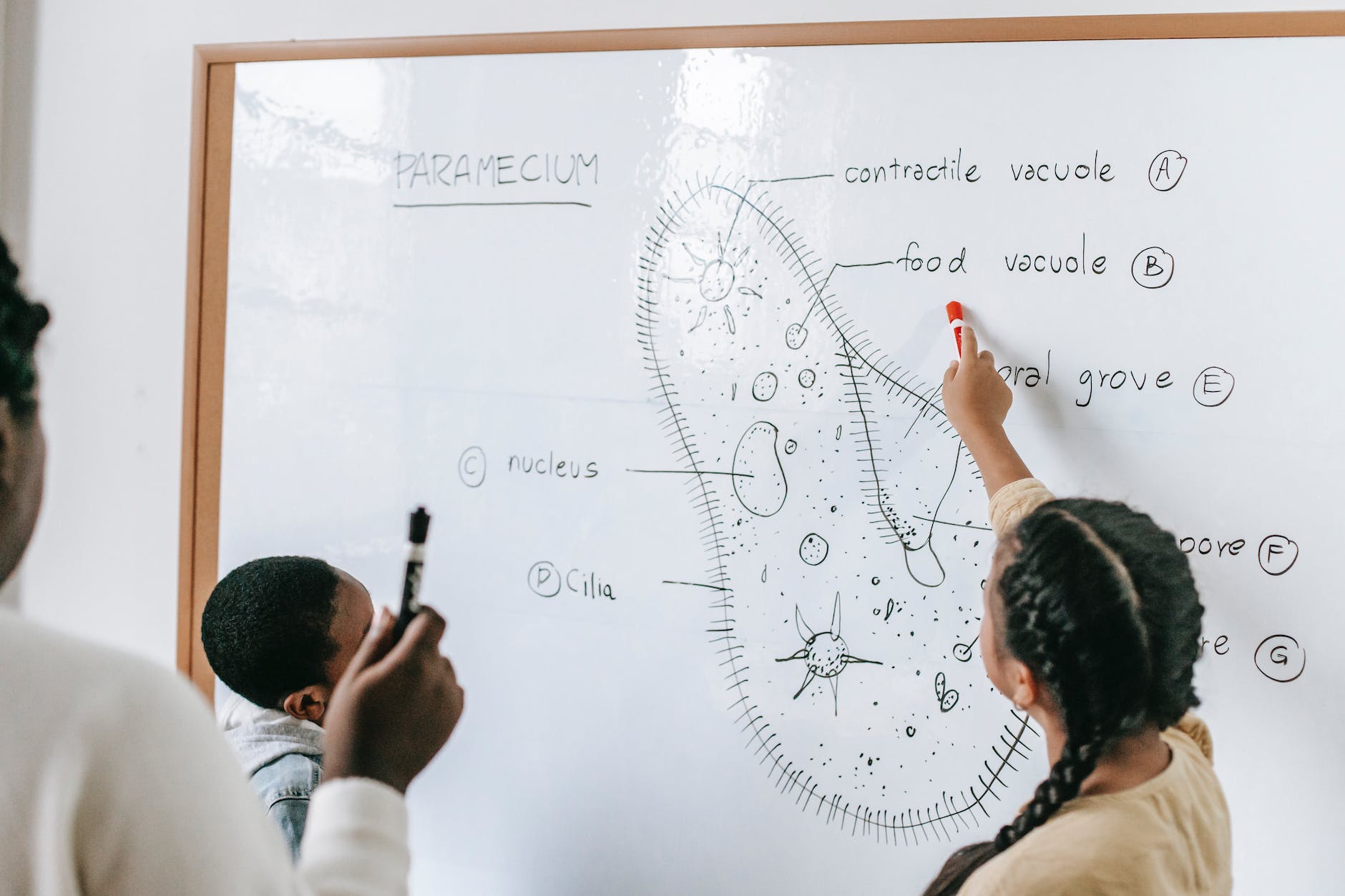
Look at a photo of a date palm or another plant suited to dry conditions. Ask why roots matter and how plants manage water. Draw a plant and label its roots, stem and leaves. Older children can compare the structure of two plants from different habitats.
2. Use a harbour story to practise Maths
Imagine six rows of eight toy boats. How many boats are there? Sketch the rows and show 6 × 8 = 48. Then ask the child to create their own boat or bus word problem and explain it to someone else.
3. Make an easy Science observation
With an adult, use a small battery-powered torch to observe how a toy’s shadow changes when the light is moved. Measure or draw two shadows. Explain what changed and what stayed the same. Avoid lasers, flames and exposed electrical equipment.
4. Build English comprehension through stories
Read a short age-appropriate passage about marine animals in the Gulf or a young inventor at a Science fair. Ask the child to tell the main idea, explain two facts and suggest one question they would like to investigate.
Choose Study Topics for the Child’s Grade
| Learning stage | Helpful topics | Suggested challenge |
|---|---|---|
| Grades 1–3 | Basic arithmetic, shapes, plants, animals, reading and spelling | Explain a two-step number story or make a labelled drawing |
| Grades 4–6 | Fractions, measurements, patterns, habitats and reading comprehension | Compare two methods for a Maths problem or explain a Science observation |
| Grades 7–9 | Algebra foundations, Science experiments, data tables and English inference | Plan a fair comparison, calculate with units and discuss a result |
| Grades 10–12 | Advanced Maths, Physics, Chemistry, Biology, coding and research skills | Use equations and evidence to solve more complex subject problems |
School systems and syllabuses can differ, especially between Kuwaiti, British, Indian and other international schools. The purpose of these examples is to help a learner practise the right skill at the right stage, not to replace the teacher’s prescribed course.


A Four-Week Olympiad Practice Plan
| Week | What to learn | A friendly activity |
|---|---|---|
| Week 1 — Get curious | Review one familiar topic from Maths, Science or English | Explain it aloud and complete a few untimed questions |
| Week 2 — Show your thinking | Draw diagrams, tables, number lines or experiments | Try two methods and discuss why they work |
| Week 3 — Apply ideas | Solve a new type of question or start a small investigation | Make a prediction, record evidence and check the answer |
| Week 4 — Reflect | Return to mistakes and celebrate improvement | Try fresh practice questions and decide which subject to explore next |
Aim for steady understanding rather than long rushed practice sessions. Families can use the syllabus from their child’s school, a few original questions and feedback from a teacher as an effective starting point.
How Kuwaiti Students Can Explore School Connect Olympiad
Kuwait appears in the SCO participating-country directory. Its public subject pages include Mathematics, Science, English and other optional challenges. Each subject page links class-wise learning materials such as a syllabus and publisher sample-paper listings.
Students interested in joining can check the student registration, school registration and latest examination dates. Select the child’s actual grade and subject, then review the available session, language, price and any included study materials at registration.
Kuwait follows Arabia Standard Time (UTC+3) all year. If a booking shows a different time zone, use the confirmed invitation to calculate the Kuwait exam start time. Participation in independent SCO exams does not automatically qualify students for Kuwait’s government programmes, KFAS initiatives or national-team selection.
20 Original Olympiad Questions for Kuwait Students
These questions move from familiar primary-school ideas to more challenging Maths, Science and English reasoning. The examples are newly written for this guide. Choose the level that suits you, explain your reasoning and try a similar question if you need more practice.
Question 1 — Maths in daily life
A Kuwait City book fair sells 37 tickets before lunch and 28 afterwards. How many tickets are sold?
A. 65 | B. 55 | C. 59 | D. 75
Answer: A. 65. Add 37 and 28: seven plus eight gives fifteen ones, and three tens plus two tens plus one carried ten make six tens. Total 65.
Question 2 — Maths in daily life
A student arranges six rows of eight toy boats. How many boats are arranged?
A. 42 | B. 48 | C. 54 | D. 56
Answer: B. 48. Six equal rows of eight objects make 6 × 8 = 48. An array drawing shows the groups clearly.
Question 3 — Maths in daily life
A rectangular science-project card measures 9 cm by 4 cm. What is its perimeter?
A. 13 cm | B. 36 cm | C. 26 cm | D. 18 cm
Answer: C. 26 cm. Perimeter measures the outside border. Add nine plus four plus nine plus four to obtain 26 centimetres.
Question 4 — Maths in daily life
What is three-quarters of 32 counters?
A. 8 | B. 12 | C. 16 | D. 24
Answer: D. 24. One quarter of 32 is eight, so three quarters are three groups of eight, giving 24 counters.
Question 5 — Science inquiry
Which part of a date palm usually absorbs water from soil?
A. Roots | B. Fruit colour | C. Flowers only | D. Leaf tips only
Answer: A. Roots. Roots take up water and minerals. Desert plants often have adaptations that help them find and conserve water.
Question 6 — Science inquiry
What causes water droplets on the outside of a cold bottle?
A. Sand entering the bottle | B. Water vapour in the air condensing | C. Light turning into ice | D. The bottle creating new water
Answer: B. Water vapour in the air condensing. Water vapour from the surrounding air cools near the bottle and condenses into liquid droplets.
Question 7 — Science inquiry
Two similar seedlings receive different amounts of water. What is the factor changed?
A. Colour of the label | B. Plant’s name | C. Amount of water | D. Student’s age
Answer: C. Amount of water. The investigator changes water quantity while aiming to keep the seedling type, soil and light similar.
Question 8 — Science inquiry
What is a safe way to explore how shadows change indoors?
A. Aim a laser at a friend | B. Open an electrical plug socket | C. Hold paper over a flame | D. Move a low-power battery torch around a toy
Answer: D. Move a low-power battery torch around a toy. A battery-powered torch can create and move shadows without the fire, laser or electricity hazards of the other methods.
Question 9 — English vocabulary
Which word means almost the same as ‘investigate’?
A. Examine | B. Ignore | C. Forget | D. Hide
Answer: A. Examine. To investigate is to examine something carefully to find out more about it.
Question 10 — English vocabulary
Which sentence is grammatically correct?
A. She go to the library on Friday. | B. She goes to the library on Friday. | C. She going to the library on Friday. | D. She are going to the library on Friday.
Answer: B. She goes to the library on Friday.. In the present simple, the third-person singular subject ‘she’ takes the verb form ‘goes’.
Question 11 — English vocabulary
A student visits a marine exhibit to learn how sea animals survive. What is the main idea?
A. The student dislikes biology. | B. The exhibit is closed. | C. The student is curious about marine life. | D. All animals live in the desert.
Answer: C. The student is curious about marine life.. The sentence describes a learner visiting an exhibit because they want to understand how sea animals live.
Question 12 — English vocabulary
Which sentence asks a question correctly?
A. What a lovely day. | B. The sky is blue? | C. where does the wind come from? | D. Where does the wind come from?
Answer: D. Where does the wind come from?. A standard written question begins with a capital letter and ends with a question mark.
Question 13 — Patterns and reasoning
Find the next number: 5, 9, 13, 17, __.
A. 21 | B. 22 | C. 23 | D. 24
Answer: A. 21. The pattern adds four each time. Seventeen plus four equals twenty-one.
Question 14 — Patterns and reasoning
Three different science books can be placed in how many distinct orders?
A. 3 | B. 6 | C. 9 | D. 12
Answer: B. 6. Choose the first book in three ways and the second in two ways; the last is fixed, so 3 × 2 = 6.
Question 15 — Patterns and reasoning
A club records 14 votes for Maths, 11 for Science and 6 for English. How many for Science and English together?
A. 31 | B. 25 | C. 17 | D. 20
Answer: C. 17. Only Science and English are asked for. Add eleven and six to get seventeen, without adding Maths votes.
Question 16 — Patterns and reasoning
A picture chart shows four star symbols, each representing three pupils. How many pupils are shown?
A. 4 | B. 7 | C. 9 | D. 12
Answer: D. 12. Each symbol stands for three pupils. Four such symbols represent 4 × 3 = 12 pupils.
Question 17 — Older learners
A toy car travels 45 metres in nine seconds at steady speed. What is its speed?
A. 5 m/s | B. 9 m/s | C. 36 m/s | D. 405 m/s
Answer: A. 5 m/s. Divide distance by time: 45 metres ÷ 9 seconds = 5 metres per second.
Question 18 — Older learners
A solution turns red litmus paper blue. What does that suggest?
A. It must be neutral | B. It is basic under ordinary test conditions | C. It is necessarily pure water | D. It cannot contain dissolved substances
Answer: B. It is basic under ordinary test conditions. Basic (alkaline) solutions normally turn red litmus paper blue. Litmus alone does not show the exact pH.
Question 19 — Older learners
A student repeats a fair Science experiment three times. Why is this helpful?
A. It guarantees the hypothesis. | B. It makes measurements unnecessary. | C. It helps assess whether results are consistent. | D. It means the sample can never be biased.
Answer: C. It helps assess whether results are consistent.. Repeated trials help identify variation and assess consistency, though they do not automatically remove all possible bias.
Question 20 — Older learners
A simple circuit has a 12-volt supply across a 4-ohm resistor. What is the ideal current?
A. 48 A | B. 16 A | C. 8 A | D. 3 A
Answer: D. 3 A. Ohm’s law states I = V/R. Divide twelve volts by four ohms to get three amperes.
Useful Kuwait Education and Science Links
| Resource | What to explore |
|---|---|
| Kuwait Ministry of Education | School notices, curricula, learning plans and exam announcements |
| 2026–27 secondary pathways announcement | How selected Grade 10 schools began exploring optional pathways |
| Kuwait Science Club | Hands-on Science, engineering fair, youth and competitive programmes |
| KFAS Generation Science Junior | A STEM leadership opportunity for students entering Grades 7–9 |
| Science International Forum – Kuwait | Student Science Congress, research, creative Science and other enrichment programmes |
| Kuwait National Robotics Championship | 2026–27 robotics and STEM innovation news |
| School Connect Olympiad subject list | Optional Maths, Science, English and related subjects for school learners |
Questions Families in Kuwait Often Ask
What Olympiad and Science opportunities exist in Kuwait?
Students can explore Kuwait Science Club projects and fairs, the university’s National Robotics Championship, SIF Kuwait’s Science Congress, KFAS youth learning and independent SCO subjects.
Can young children begin Olympiad-style learning without enrolling in an exam?
Yes. Short Maths puzzles, Science observations, reading discussions and school clubs help younger children practise useful thinking skills.
Is the Kuwait Children’s Science Congress taking place in 2026?
SIF Kuwait has announced 13 November 2026 as the event date and 31 October as its project-submission deadline. Schools should check the organiser for current participation instructions.
What is KFAS Generation Science Junior?
It is a STEM leadership and outreach initiative for students entering Grades 7, 8 or 9, according to the KFAS programme description.
Has Kuwait changed every Grade 10 school to a new system?
No. The Ministry announced a 2026–27 secondary pathways pilot for selected schools, while the existing approach continues elsewhere.
What subjects can students explore through SCO?
SCO lists class-wise Maths, Science and English resources along with other independent Olympiad subjects.
Is the SCO International Math Olympiad the official national-team IMO?
No. SCO’s school-level Maths competition is different from the official national-team International Mathematical Olympiad.
Does an SCO enrolment include unlimited mock tests and study resources?
Included services vary by selected subject and current offer. Open the actual registration information to see what’s available rather than relying on an older blog’s price.
Can Kuwaiti students use a different school curriculum to practise Olympiad problems?
Yes, but start with the pupil’s own class lessons and choose complementary topics at the right difficulty level.
How should parents support a child who gets a question wrong?
Ask the child to explain the original thinking, draw a model or observation, correct the idea and try a fresh similar problem. Encourage curiosity and persistence.
Keep Exploring and Asking Questions
A young learner who enjoys Science, Maths or language puzzles already has a valuable starting point: curiosity. Choose one small challenge today, talk about how you solved it, then explore a suitable Kuwait learning activity or the SCO subject directory when you’re ready. Strong learning habits are built one thoughtful question at a time.






Leave a Reply