

What is STEM education and why is it important and STEM Education Definition
STEM — Science, Technology, Engineering and Mathematics — is an interdisciplinary approach to teaching and learning that connects rigorous academic concepts to real-world problems and experiences. The National Science Foundation (NSF) and leading education bodies describe STEM as more than four subjects: it’s a way of thinking, designing, testing, and iterating so learners develop scientific literacy, computational thinking, engineering design habits, and quantitative reasoning skills.
Why is this important? In today’s rapidly evolving economy and society, jobs, civic life, and even daily decision-making increasingly depend on people who can analyze evidence, reason with data, design solutions to complex problems, and work collaboratively across disciplines. International organisations including UNESCO and OECD emphasise that improving STEM learning is essential to achieving 21st-century learning goals, sustainable development, and labour-market readiness.
Science, technology, Engineering, and Mathematics
- Science — asking evidence-based questions, observing, forming hypotheses, and testing them.
- Technology — understanding tools, systems, and software; using computational thinking to solve problems.
- Engineering — applying design thinking and an iterative approach to build practical solutions to needs.
- Mathematics — developing numerical fluency, patterns, logic, and abstract reasoning that underpin the other three disciplines.
Taken together, STEM learning teaches students how to approach messy problems, gather and interpret data, experiment responsibly, and communicate outcomes — exactly the capabilities modern employers, researchers, and communities value. nsta.org

What is STEM for kids
STEM for young learners starts with curiosity, play, and guided exploration. Simple prompts such as “Which is faster — this toy car or that truck?” invite hypothesis formation, controlled testing, observation, recording results, and reflection. Those steps mimic the scientific method and engineering design process in age-appropriate form and teach children the mindset of inquiry and resilience. Hands-on materials (real-world objects like fruit, water bottles, textured papers) engage sensory learning and make experiments meaningful to early learners.
Key practical micro-steps for parents and teachers:
- Ask a question, make a guess (hypothesis), plan a small test.
- Gather simple materials and set up an experiment.
- Observe carefully, record brief notes or sketches, compare results.
- Discuss what happened and why, and celebrate learning even when experiments “fail.”
- Encourage iteration: how could we redesign the test or the toy to do better?
These behaviors build habits — persistence, reflection, teamwork, and curiosity — that compound into stronger STEM competence over time.

Starting STEM at home — a short, hands-on routine
- Pose a simple comparative question (speed, buoyancy, strength).
- Plan a test with 2–3 variables (surface, slope, weight).
- Run short trials, record outcomes (picture, tick marks).
- Reflect: “What surprised us?” and “How would we change it next time?”
- Try a small redesign and repeat.
This cycle is the seed of scientific thinking and design habits students will leverage in formal STEM classes and competitions later.
Why early STEM matters for girls and boys
Evidence across countries shows that early exposure and encouragement, especially for girls, reduces later gender imbalances in STEM fields. Creating playful, supportive, and low-stakes experiences in early years models STEM as approachable and relevant for every child. UNESCO and other education agencies stress inclusive STEM access as a pathway to equitable economic opportunity. UNESCO

SCO Olympiad: what it is and why it matters for STEM learners
School Connect Olympiad (SCO) is an international competition platform that runs subject-specific Olympiads across STEM and related disciplines (Maths, Science, Coding, AI, Physics, Chemistry, Biology, Mental Ability, and more). SCO positions itself as a multilingual, AI-assisted assessment platform with global participation: their public materials report hundreds of thousands of participants and presence across dozens of countries. These global benchmarks, standardized tests, and analytic reports help students, parents, and schools measure readiness and identify gaps against international peers.
How SCO Olympiad enhances STEM education
- International benchmarking: Students compare skills against peers across countries. NextGen Learners
- Curriculum-aligned practice: Subjects and questions mapped to standard curricular expectations for grades.
- Data-driven feedback: Detailed performance reports show skill strengths/weaknesses — actionable for teachers and parents.
- Motivation and recognition: Certificates, awards, and recognition motivate sustained effort and build CV/portfolios.
- Accessibility: Online delivery and free study resources broaden access across geographies.
Advantage of SCO Olympiad Registration for Students / Parents / Schools
| Stakeholder | What SCO registration provides | Immediate benefit | Long-term academic value |
| Students | Access to mock tests, practice papers, international competition, certificates | Better preparation, confidence, familiarization with exam conditions | Improved problem-solving skills, international recognition for higher education/scholarships. |
| Parents | Transparent performance reports, guidance resources, internationally comparable scores | Clear view of child’s strengths, targeted support at home | Evidence of achievement for scholarships/portfolios; structured development plan. |
| Schools | Bulk registration options, school-level analytics, awards for cohorts | Easy administration, improved student engagement | School reputation uplift; data to refine teaching and curriculum pacing. |
(SCO platform claims: more than 400,000 students and presence in dozens of countries — source: School Connect Online public pages.)
Country-wise learning outcomes: typical differences — WITHOUT SCO vs WITH SCO advantage
Note: the table below is qualitative and synthesises common, observable differences educational systems see when a structured international Olympiad programme (like SCO) is introduced. SCO participation data and country availability are published by School Connect Online.
| Country (example) | Typical learning outcome without SCO | Typical learning outcome with SCO advantage |
| India | Strong syllabus coverage but variable problem-solving exposure outside top schools | Students gain exposure to higher-order thinking, frequent mock practice, national & international benchmarking; many schools use SCO reports to target interventions. |
| United States | Robust STEM resources in many districts but inequality across districts | SCO offers standardized international comparison and extra practice for motivated students; useful for homeschoolers and international schools. |
| United Kingdom | Good curriculum alignment; emphasis on conceptual understanding | SCO adds competition format and performance analytics that help prepare for higher-level contests and university applications. |
| Nigeria | Resource constraints in many schools; limited access to international benchmarks | SCO’s online access and free resources help raise awareness, provide practice, and create scholarship/award opportunities. |
| Philippines | Broad curricular coverage; access gaps between urban and rural areas | SCO’s online platform enables rural learners to access mock tests and standardized evaluation, improving readiness. |
| Kenya | Strong interest in STEM but limited structured international exposure | SCO helps create pathways for international recognition and competition experience. |
| UAE / Qatar | High investment in STEM schooling, international curriculum schools | SCO provides an additional credential and benchmarking against a wider global field. |
Impact summary: across contexts, introducing a global Olympiad program tends to raise student motivation, increase targeted practice on higher-order problems, and provide measurable analytics schools can use to refine teaching — all outcomes UNESCO and OECD recommend for scaling STEM competency.
Live examples — students participating globally (selected mentions)
SCO publishes country pages and blog posts featuring case studies and outreach — for example, the SCO blog highlights participation and partnerships across countries including India, Philippines, Nigeria and several countries in the Middle East and Africa. These public case studies show learners from diverse contexts entering SCO Olympiads and benefiting from practice materials, mock tests, and awards. For detailed, country-by-country case posts see the SCO country pages.
Comparison: STEM education with vs without SCO Olympiad (short analytical comparison)
Without SCO (typical system):
- Curriculum-driven learning, often classroom-centric.
- Assessment limited to local or national exams.
- Variable exposure to international benchmarking and competitive formats.
- Teachers must design additional enrichment independently.
With SCO (system plus Olympiad exposure):
- Regular international benchmarking and simulated contest environments.
- Rich repository of mock tests, practice questions, and analytics for targeted remediation.
- Motivational incentives (certificates, medals) that drive sustained practice.
- Better evidence for performance tracking and school improvement planning.
Net result: SCO acts as a multiplier for student motivation and data-driven teaching — it doesn’t replace high-quality classroom instruction but it amplifies problem-solving practice, international exposure, and teacher insights.
How SCO ties into global education priorities
UNESCO and OECD frameworks stress competency-based learning, equitable access, and assessment that supports learning rather than only ranking. SCO’s model — free preparation material, online assessments, multilingual access, and analytics — aligns closely with these international priorities by widening access to formative assessments and globally comparable performance indicators.
Practical roadmap for schools & parents to use SCO for STEM gains
- Register cohorts early (bulk registration for schools).
- Use free study materials and mock tests for weekly practice sessions.
- Track performance reports to group students by skill gaps (analytics).
- Design after-school problem clubs using SCO sample problems to encourage teamwork and peer learning.
- Celebrate progress publicly (certificates, assemblies) to sustain motivation.
- Review and iterate: use SCO reports to refine lesson plans and remedial sessions.
FAQs
What exactly does STEM stand for?
STEM stands for Science, Technology, Engineering, and Mathematics — an integrated approach to learning that emphasizes problem solving, critical thinking, and real-world application. Encyclopedia Britannica
Why is STEM education important for young children?
Early STEM nurtures curiosity, logical thinking and persistence. These foundational skills support later academic success, career readiness, and the ability to solve complex problems.
At what age can children start STEM activities?
From preschool onward — age-appropriate activities like sorting, simple experiments, and guided play introduce basic scientific and engineering habits.
How does SCO Olympiad support STEM learning?
SCO provides structured practice, mock tests, international benchmarking, and analytics which help learners identify gaps and improve problem-solving skills.
Is SCO suitable for students in rural or low-resource settings?
Yes — SCO’s online format and free resources increase accessibility; reliable internet is a factor, but many schools run group sessions to expand access.
Will competing in Olympiads help with school grades?
Indirectly — Olympiad practice builds higher-order thinking and exam technique that often translates into improved school performance.
Does SCO offer practice materials before registration?
SCO publishes free study resources, sample questions, and mock tests to help students prepare.
Are SCO certificates recognised internationally?
SCO provides international certificates and awards; while recognition varies by institution, certificates add value to student profiles and applications.
Do Olympiads favour students from private schools?
Olympiads are designed to be accessible to all; SCO’s free materials and online access aim to reduce inequities. Active teacher support matters most.
How should parents support STEM learning at home?
Encourage curiosity, ask open-ended questions, run simple experiments, and review SCO or practice reports to focus support areas.
Are there scholarships tied to SCO performance?
Some regions and partner organisations may offer scholarships; check SCO’s country pages and local partners for opportunities.
What subjects does SCO offer under STEM?
Maths, Science, Coding, AI, Physics, Chemistry and Biology are all part of SCO’s subject suite.
How are SCO exams delivered?
Primarily online with time-bound tests; formats may vary by subject and grade. Mock tests replicate actual conditions.
Can schools register many students at once?
Yes — SCO supports bulk/school registration and provides resources tailored for group participation.
How can teachers use SCO reports?
Teachers can group students by skill gaps, design targeted lessons, and track progress across cycles using SCO analytics.
Will SCO participation help university applications?
Strong Olympiad performance demonstrates initiative and higher-order skills on a student’s academic record, which can be beneficial for competitive admissions.
How often are SCO Olympiads held?
SCO runs cycles (seasonal schedules); check the official schedule and country pages for exact dates.
What is the cost of SCO registration?
Fees vary by country and level; SCO also provides free resources — check the country registration page for exact pricing.
Does SCO provide practice for coding and AI?
Yes — SCO offers specialized Olympiads in Coding and AI with problem formats suited to computational thinking.
How can a school evaluate whether to adopt SCO programmes?
Pilot a cohort, review SCO’s mock tests and analytics, compare pre/post performance, and survey teacher/parent/student satisfaction — the data will show ROI.
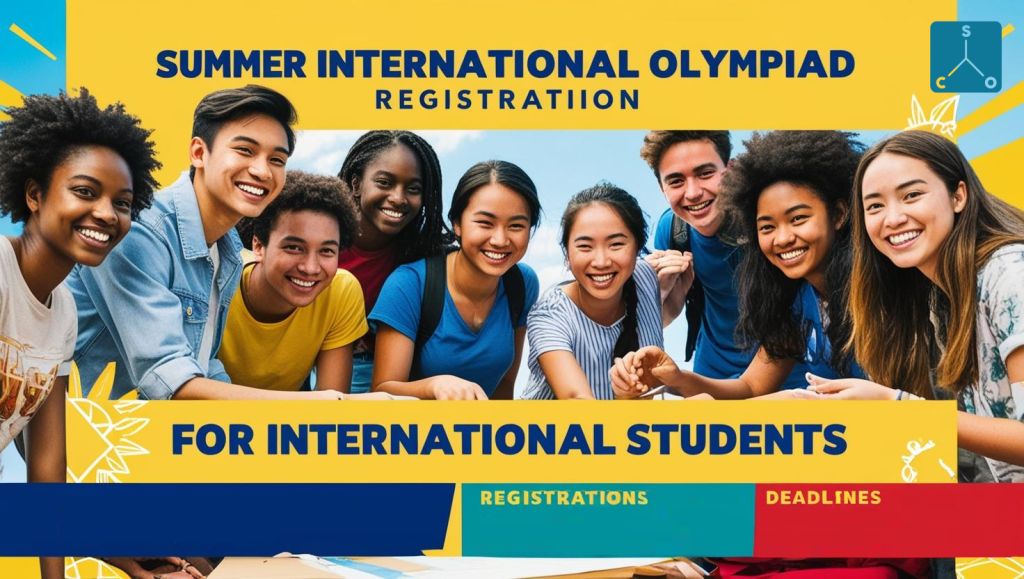
Join the SCO International Olympiad Today!
Connect with students from over 80 countries in the prestigious SCO International Olympiad. Showcase your academic talents, earn international recognition, and compete for exciting scholarships and awards.






Leave a Reply