

New-Age Education: Effective Strategies for STEM, Experiential Learning & 21st-Century Skills
Education today must prepare learners for a rapidly changing world where creativity, critical thinking, and technical fluency matter as much as foundational knowledge. Modern STEM education combined with experiential learning (learning by doing and reflecting) produces durable understanding and transferable skills. This article summarises why these approaches matter, offers practical classroom strategies, provides age-wise learning outcomes, and shows how students can channel their learning into performance opportunities such as the SCO International Olympiad (SCO IAIO).
Why STEM + Experiential Learning Works
STEM (Science, Technology, Engineering, Mathematics) is not just a curriculum area — it is an approach that trains students to ask testable questions, analyze data, design iterative solutions and communicate results. When coupled with experiential learning — hands-on projects, labs, fieldwork and reflective assessment — students internalise concepts rather than memorize facts. Benefits include:
- Improved problem-solving and logical reasoning.
- Stronger engagement and motivation.
- Real-world readiness for tech-driven careers (AI, data science, robotics).
- Transferable soft skills: collaboration, communication and ethical judgment.
For research and policy context, see UNESCO’s guidance on AI and education (https://en.unesco.org ) and OECD reports on skills for the digital age (https://www.oecd.org ).
High-Impact Classroom Strategies
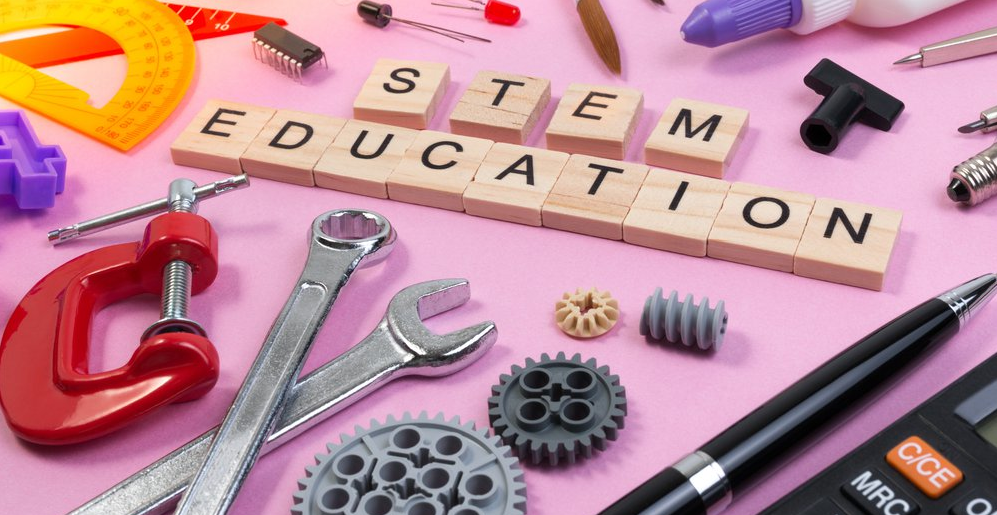
STEM is ever-present in all parts of daily life in the modern world.
- Project-Based Learning (PBL): Give students an authentic problem (local or global), let them scope it, collect data, build a prototype and present solutions. PBL maps directly to Olympiad project cycles.
- Micro-labs & Iteration: Short in-class experiments (20–40 minutes) that build toward a larger product or report. Frequent iteration increases learning gains.
- Integrated Coding Practice: Teach Python scripts for data cleaning, visualization, and small simulations — practical programming accelerates computational thinking. Free resources: Khan Academy (https://www.khanacademy.org) and MIT OpenCourseWare (https://ocw.mit.edu).
- Ethics & Reflection: Embed short ethical case studies after every technical lesson—students explain trade-offs, biases and privacy implications. Reference UNESCO and OECD frameworks for discussion prompts.
- Assessment for Learning: Use rubrics that reward process (scoping, data hygiene, reasoning) not only right answers; include peer review and self-reflection.
Class-wise (Age-wise) Learning Outcomes
Below is a compact, practical list of outcomes you can adapt for lesson planning.
Primary / Lower Primary (ages 6–10):
- Understand what sensors and simple machines do.
- Make predictions, record observations and describe patterns.
- Work cooperatively on simple experiments.
Upper Primary / Middle (ages 11–14):
- Apply basic programming constructs (variables, loops).
- Collect and clean simple datasets; produce charts and summaries.
- Plan a small project using the problem-scoping → prototyping cycle.
- Identify basic ethical concerns (privacy, fairness).
Secondary (ages 15–18):
- Build and evaluate simple predictive models and prototypes.
- Implement Python scripts for data processing and visualization.
- Explain model limitations, bias and explainability.
- Lead cross-disciplinary projects and present evidence-backed conclusions.

Table: Countries with Important Contributions to STEM Education & Priorities
| Country | STEM Strength / National Priority | Notes for Schools & SCO Participation |
| United States | Strong STEM research, university pathways, coding bootcamps | Large pool of Olympiad participants; regional hubs |
| India | Large school network, CBSE AI curriculum rollout | High school engagement; many SCO registrations via schools |
| United Kingdom | Strong computing curriculum, computer science at GCSE/A-level | Active enrichment providers; easy access to competitions |
| Germany | Vocational & technical integration, engineering emphasis | Industry partnerships for project mentorship |
| France | Strong science pedagogy and research labs | Focus on ethical AI and robotics competitions |
| Singapore | Rigorous STEM schooling and national strategies | High adoption of coding & AI modules; international focus |
| Australia | Regional STEM initiatives and teacher development | Good remote access to Olympiads for rural schools |
| New Zealand | Curriculum emphasises computational thinking & creativity | Strong project-based learning culture |
| Canada | Provincial STEM programs and research networks | Emphasis on equity & inclusive access |
| United Arab Emirates | National STEM hubs and AI strategy | Growing participation in international Olympiads |
| Qatar | Investment in STEM education and partnerships | Emerging hub for regional competitions |
| Zimbabwe | Focus on access and capacity building in STEM | Growing interest in global Olympiads |
Learning Outcomes — Concrete Examples (Teacher-ready)
- Data literacy outcome: Students can collect 50 records, clean the dataset (remove duplicates, fill missing values), produce a summary table and create two charts that answer a specific question.
- Modeling outcome: Students can build a simple regression or classification model, explain how it makes predictions, and list three limitations (e.g., sample bias).
Ethics outcome: Students can evaluate one AI case and propose two changes that would reduce harm or increase fairness.
Parent & Teacher Notes
For Parents: Encourage curiosity — ask how your child solved a problem and what they learned from failure. Provide time and a quiet space for project work. Celebrate the process (iterations, documentation, ethical reasoning), not just final results.
For Teachers: Start small. Integrate five-minute data challenges into any subject. Use cross-curricular projects (e.g., combine geography and data science). Use rubrics that reward process and reflection.
Practical 10-Week Plan to Integrate STEM & Olympiad Prep
- Weeks 1–2: Foundations & Ethics modules — small case studies each class.
- Weeks 3–4: Data acquisition & visualization — short group projects.
- Week 5: Modeling & evaluation — simple classification/regression exercises.
- Week 6: Python essentials — data I/O, lists, plotting.
- Week 7–8: Full project cycle — scoping → data → model → evaluation.
- Week 9: Mock Olympiad papers and timed tasks.
- Week 10: Reflection, polish portfolios and submit for SCO IAIO.
Encouraging Participation & School Partnerships
Schools can promote SCO IAIO by running in-school demo days, parent webinars, and project showcases. Partner with local universities or tech companies for mentorship. Highlight successful projects publicly to build momentum for subsequent years.
Frequently Asked Questions
What is experiential learning and why is it important?
Experiential learning is learning by doing and reflecting; it builds deeper understanding and real-world skills that traditional rote learning often misses.
How does STEM prepare students for future careers?
STEM teaches problem solving, data literacy, engineering design and technical fluency — skills directly applicable to technology, research and industry roles.
Is prior programming experience required to start STEM projects?
No. Start with block-based tasks or simple Python snippets; scaffold complexity over time.
How do teachers assess project work fairly?
Use rubrics that measure scoping, methodology, documentation, result interpretation and ethical reflection.
What age should children begin computational thinking?
Early exposure (ages 6–10) using unplugged activities is ideal; programming concepts can be introduced progressively by ages 11–14.
How can parents support STEM learning at home?
Encourage curiosity, provide time for projects, discuss ethical implications and celebrate iteration over perfection.
What resources help teachers get started with AI topics?
UNESCO policy briefs, CBSE facilitator guides, Edutopia articles and Khan Academy courses are practical starting points.
What is SCO International Olympiad (SCO IAIO)?
SCO IAIO is a subject-focused international Olympiad that evaluates reasoning, data tasks, project work and ethics aligned to modern curricula.
How can schools register for SCO IAIO?
Schools can register cohorts via the SCO portal or contact their local SCO representative for bulk invoicing and scheduling.
Are there accommodations for special needs students?
Yes — SCO accepts accommodation requests if submitted with supporting documentation during registration.
How do Olympiads benefit students beyond awards?
They strengthen portfolios, provide benchmarking, motivate deeper study and may open training or scholarship opportunities.
Which countries actively participate in STEM Olympiads?
Active participants include India, USA, UK, Germany, France, Singapore, New Zealand, Australia, Canada, UAE and others.
How much classroom time do AI projects require?
Project time varies; a practical course model suggests weekly labs plus a term-long project cycle (total 30–70+ hours depending on depth).
What are quick wins for schools starting STEM programs?
Start with one interdisciplinary project, integrate short coding labs, and run a mock competition to stimulate interest.
How are ethical considerations taught in STEM?
Through case studies, debates, reflective journals and requirement that every project includes an ethics statement.
Can students use Olympiad projects for college applications?
Yes — well-documented projects and competition awards are strong evidence of initiative, technical skill and problem solving.
Final note — next steps
To scale STEM and experiential learning across your school or district: adopt a phased rollout, train teachers with micro-workshops, integrate small weekly labs, and promote international opportunities like the SCO International Olympiad (SCO IAIO) for benchmarking. For registration assistance, bulk pricing or teacher training tied to SCO IAIO, contact: [email protected].
Important Links for reference
- CBSE — official curriculum hub : https://cbseacademic.nic.in
- UNESCO — AI in education guidance: https://en.unesco.org
- OECD — education & skills in the AI era: https://www.oecd.org
- World Economic Forum — skills for the future: https://www.weforum.org



Leave a Reply